
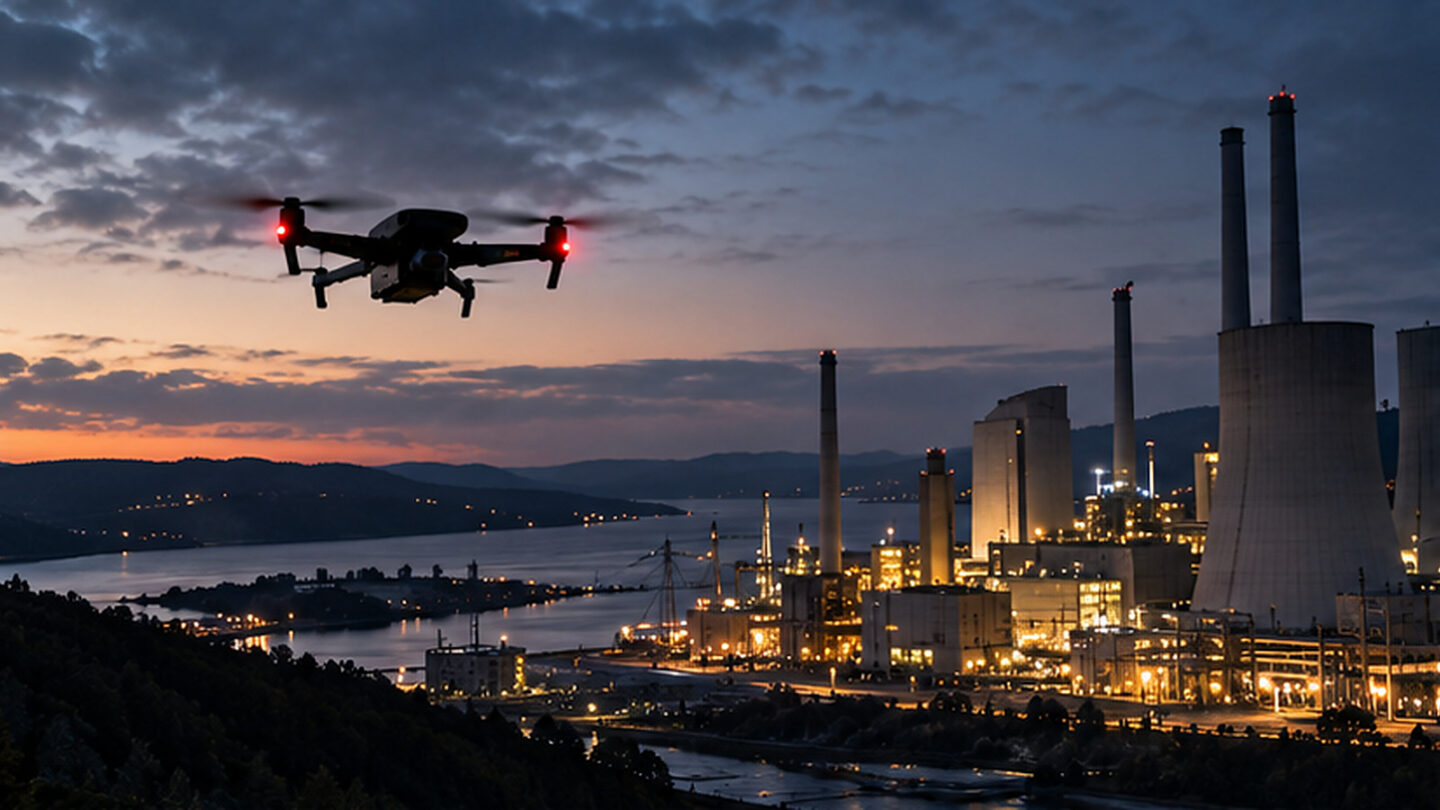
A drone above critical infrastructure. Who responds?
An unidentified drone appears near a power station. Security personnel can detect it, but determining who is operating it, what it is doing and whether it poses a threat is far more complicated. Across Europe, authorities and infrastructure operators are facing a growing challenge: Who takes responsibility when a potential threat comes from above?Protecting critical infrastructure is no longer only about fences, surveillance cameras and controlled access. Drones can approach sensitive facilities from unexpected directions, creating security challenges that traditional protection measures were never designed to address. At the same time, the technology is becoming an increasingly valuable tool for inspecting and maintaining the very infrastructure that authorities need to protect.
This creates a difficult balance. Operators must be able to distinguish between legitimate drone activity, accidental airspace violations and potentially hostile operations. Detecting an aircraft is important, but understanding its intentions and determining the appropriate response can be considerably more demanding.
When detection is not enough
For energy companies, ports, airports and other infrastructure operators, the greatest challenge may not be a lack of technology. It may be the division of responsibility between organisations involved in protecting the same facility.
Police, defence organisations, aviation authorities and private security providers often operate with different responsibilities, information systems and legal powers. Without clear procedures and shared situational awareness, even an accurately detected drone can create uncertainty about who should act and when.
As Europe strengthens its approach to Counter-UAS, the focus is increasingly shifting towards how detection systems, operational procedures and decision-making can work together. Effective protection requires more than identifying an unknown aircraft. It requires organisations to understand what the information means and how it should be used.
From awareness to operational capability
These challenges are becoming increasingly relevant as critical infrastructure operators invest in new security technologies. Radar, radio-frequency detection, optical sensors and integrated command systems offer new capabilities, but their effectiveness depends on how they are implemented and used in real operations.
At Nordic Security Summit 2027, these questions will be explored through discussions involving public safety authorities, infrastructure operators, defence representatives and technology specialists. The programme will address practical approaches to drone detection, situational awareness and the protection of critical infrastructure.
The ambition is to move beyond identifying risks and examine what organisations actually need to strengthen their preparedness.
Nordic Security Summit 2027 takes place at Turning Torso in Malmö, Sweden, on 27–28 January 2027.
