
When drones become tools for organised crime
Drones are giving criminal networks new ways to operate, from smuggling contraband into prisons to monitoring sensitive locations. For law enforcement, the technology presents challenges that traditional policing methods were not designed to address. But the same drones used to commit crimes may also contain valuable evidence that helps investigators identify those responsible.Drones were once primarily associated with photography, recreation and commercial operations. Today, their growing availability and capabilities have also made them attractive tools for organised criminal activity.
In several European countries, authorities have encountered drones being used to transport drugs, mobile phones and other prohibited items into correctional facilities. Their ability to cross physical barriers and operate at a distance creates serious challenges for security organisations.
The problem extends beyond prisons. Drones can support reconnaissance, surveillance and other criminal activities, allowing individuals to gather information or conduct operations without being physically present at the scene.
A new challenge for law enforcement
As drone technology becomes more capable, police and security authorities must adapt their methods for detecting suspicious activity, responding to incidents and investigating potential offences.
Unlike traditional security threats, a drone may be operated from a considerable distance, making it difficult to identify the person responsible. Criminal operators may also change equipment, operating methods and communication technologies to reduce the risk of detection.
For investigators, understanding the technology is therefore becoming increasingly important. Effective responses require cooperation between operational police units, technical specialists and digital forensic investigators.
The evidence left behind
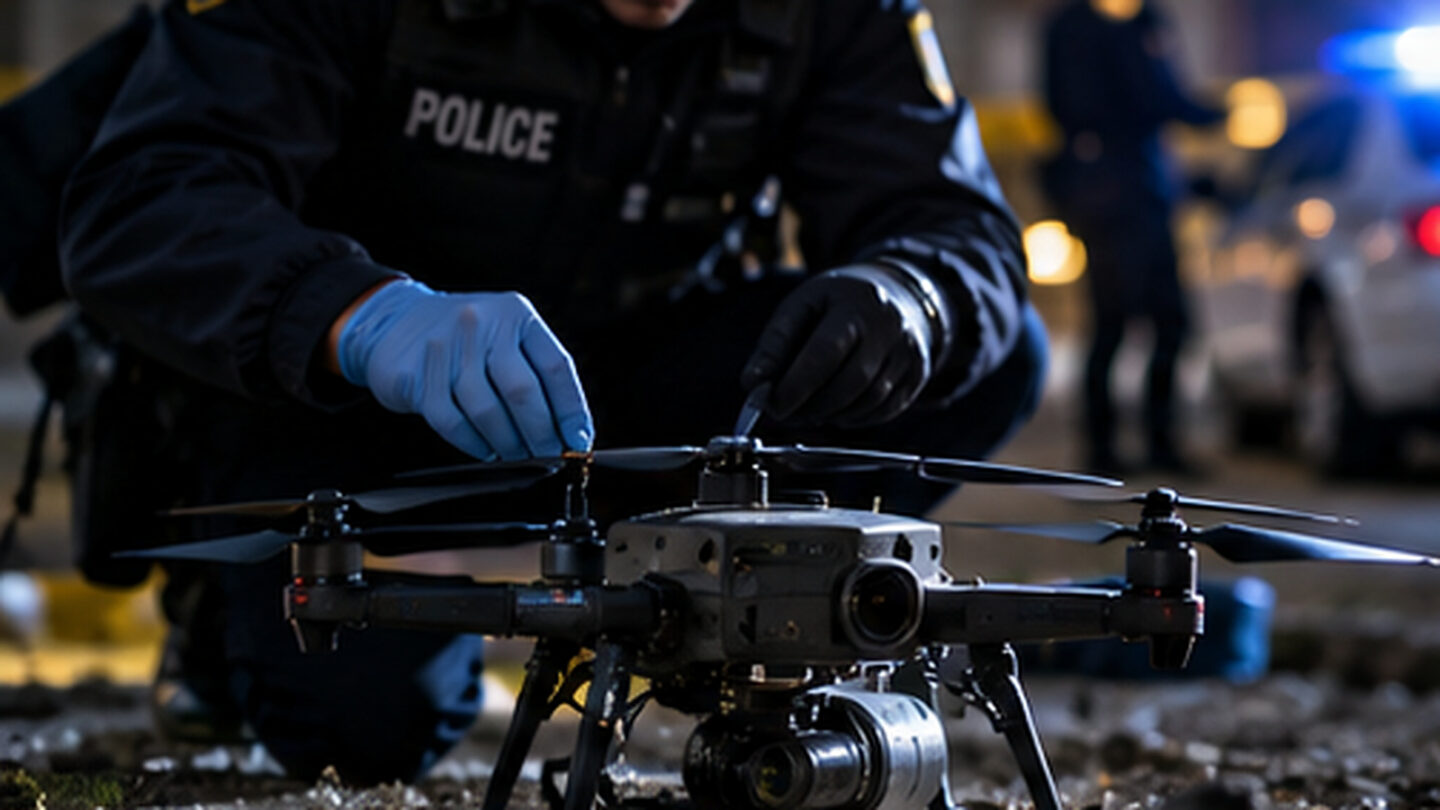
Despite the challenges, drones can also provide valuable investigative opportunities. A recovered aircraft may contain flight records, technical identifiers or other digital information that helps investigators reconstruct events and identify connections between incidents.
This makes drone forensics an increasingly relevant part of modern law enforcement. The ability to preserve, analyse and interpret evidence can help authorities move beyond detecting an incident towards understanding who was involved and how an operation was carried out.
At Nordic Security Summit 2027, drone-related crime, digital forensics and operational lessons from international law enforcement will be among the important topics explored.
The conference brings together police, public safety professionals and security specialists to exchange experience and examine how authorities can respond to evolving criminal uses of unmanned technology.
Nordic Security Summit 2027 takes place at Turning Torso in Malmö, Sweden, on 27–28 January 2027.
Learn more about the summit and participation opportunities →
